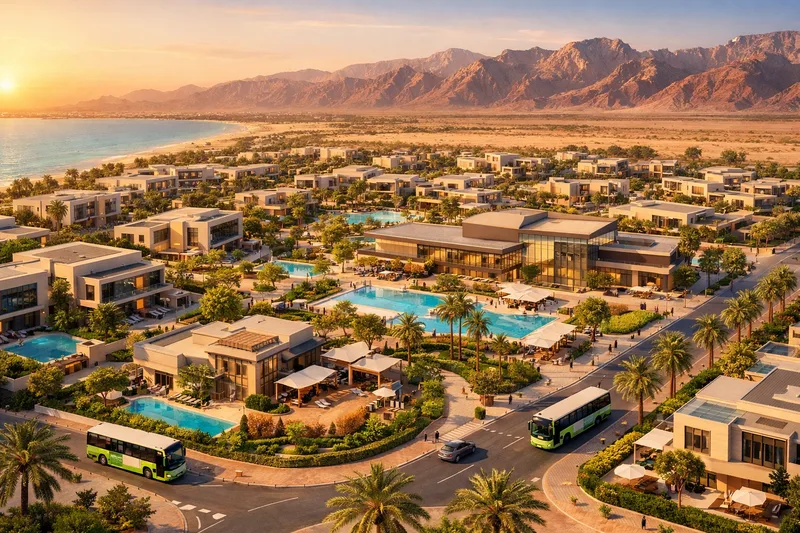
Wynn Resorts has announced the development of Oasis, A Wynn Community — a purpose-built residential village designed to house more than 7,000 colleagues who will work at the upcoming Wynn Al Marjan Island resort in Ras Al Khaimah, UAE. Spanning 26 acres, the community represents one of the most ambitious workforce housing projects in the hospitality sector.
More Than Housing
Oasis is designed as a fully integrated community, not just a collection of residential buildings. The development includes a wide range of amenities and services aimed at supporting the daily lives, health, and professional growth of Wynn team members.
Planned facilities include:
- Modern residential units in a variety of configurations
- Dining halls and food outlets offering diverse cuisine options
- Fitness centers, swimming pools, and sports courts
- Healthcare and wellness clinics
- Retail and convenience stores
- Learning and development centers for ongoing training
- Community gathering spaces and recreation areas
- Dedicated transport to and from Wynn Al Marjan Island
Why Wynn Is Investing in Workforce Living
Wynn Al Marjan Island is set to be one of the most significant hospitality developments in the region — a luxury integrated resort on a man-made island in Ras Al Khaimah. Operating a property of this scale requires a large, well-supported workforce. And in a market where competition for talent is intense, the quality of the employee experience — both on and off property — becomes a strategic differentiator.
By building Oasis, Wynn is making a clear statement: the people who deliver the guest experience deserve an experience of their own. This isn’t a new idea, but the scale and intentionality behind Oasis raise the bar for what workforce housing in hospitality can look like.
Setting a Regional Standard
The UAE’s hospitality sector is expanding rapidly, with mega-projects in Dubai, Abu Dhabi, and Ras Al Khaimah all requiring thousands of new hires. Staff accommodation has traditionally been a functional necessity — often basic, sometimes inadequate, and rarely designed with the same care as guest-facing facilities.
Oasis represents a shift. It’s designed with the same attention to quality, community, and wellbeing that Wynn applies to its guest experience. If the model proves successful, it could set a new standard for how hospitality operators in the region — and globally — think about workforce infrastructure.
The Recruitment and Retention Impact
In a region where most hospitality employees are expatriates, the quality of accommodation is a major factor in both recruitment and retention. A purpose-built community with integrated services, wellness facilities, and social spaces is a powerful recruitment tool — particularly for candidates relocating from overseas who are evaluating offers from multiple employers.
Retention is equally important. High turnover is one of the most expensive problems in hospitality. By investing in the daily quality of life for its team members, Wynn is addressing one of the root causes of attrition: the feeling that life outside of work is an afterthought.
Learning and Development Integration
One of the most notable features of Oasis is the inclusion of learning and development facilities. This signals an approach where professional growth is embedded into daily life, not limited to the workplace. On-site training centers, mentorship programs, and skills development resources make it easier for team members to grow within the organization — and harder for them to see reasons to leave.
A Model for the Future
Oasis joins Emirates’ cabin crew village as part of a broader trend in the Gulf region: purpose-built workforce communities designed around wellbeing, retention, and operational efficiency. As the region continues to build at scale, these models offer a practical solution to one of hospitality’s most persistent challenges — attracting and keeping great people.
For Wynn, the investment in Oasis is not just about logistics. It’s about culture. And in hospitality, culture starts with how you treat the people who create it.