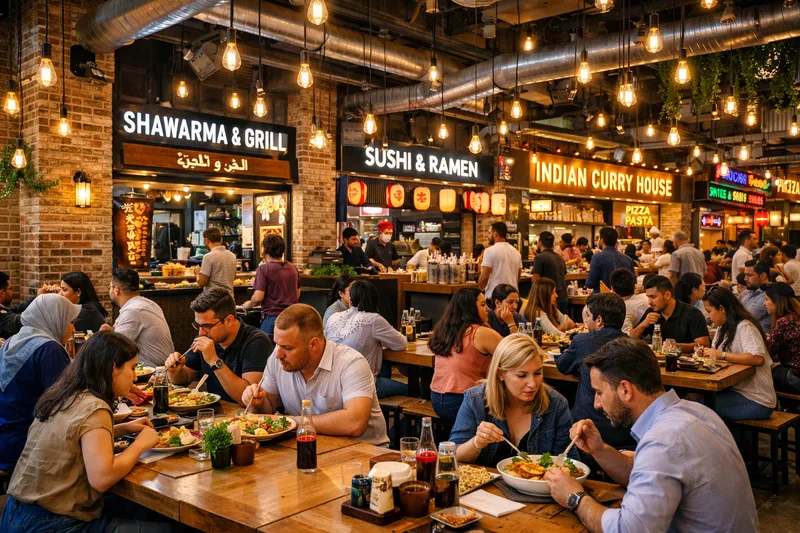
In recent years, food halls have emerged as a major trend in Dubai’s dynamic food and beverage landscape. These versatile dining destinations are reshaping how people experience food, blending variety, locality, and community spirit into one space. The latest addition is Market Island at Dubai Festival City Mall, spanning 70,000 square feet with over 50 food outlets — the largest food hall in the Middle East.
The Rise of Food Halls: Changing Consumer Preferences
Food halls are becoming a hit due to their ability to offer diverse, high-quality food experiences under one roof. Dubai’s growing population of residents and tourists has increased demand for unique dining options. Food halls provide an answer by merging variety with vibrancy in a welcoming environment.
Food halls are an excellent way for local chefs and small restaurateurs to showcase their talent without the significant investment required for standalone restaurants. This format offers a platform for culinary experimentation, enabling chefs to test new concepts and reach a broad audience with minimal risk.
Social Interaction and Experiential Dining Post-COVID
Many people, particularly Millennials, are shifting spending towards experiences rather than material possessions. Food halls cater to this shift by providing a communal dining atmosphere where patrons can enjoy a variety of food options while socializing. Unlike traditional food courts, food halls emphasize quality, ambiance, and a curated dining experience.
A Platform for Culinary Diversity and Local Talent
Food halls offer a lower-cost entry point for food operators, leading to high foot traffic in premium locations. They prioritize fresh, made-to-order dishes, setting them apart from pre-prepared offerings in traditional food courts. Flexible leasing terms and lower overhead costs make them accessible for independent vendors and small businesses.
Business Appeal: Quick Returns and High Engagement
From a business perspective, food halls typically yield quicker investment returns due to high consumer interaction and lower operating costs. They attract a wide demographic, driving significant foot traffic to other parts of a mall. Food halls are strategic for developers to activate large spaces, drawing customers with higher spending power.
The Future: Technology and Sustainability
The next generation of food halls will focus on digital integration — apps for ordering, AI-powered recommendations, and augmented reality experiences. There is also growing emphasis on sustainability, with food halls prioritizing local sourcing and zero-waste initiatives.
Food halls are redefining dining in Dubai, offering a blend of diversity, locality, and community that resonates with modern consumers. Together with traditional food courts, they are shaping the future of dining, making Dubai an even more exciting culinary destination.